-95x98.png)
How to Think Like a Scientist
A Student’s Guide to Learning, Questioning, and Understanding Biomedicine
Most students approach science as something to memorize—facts to recall, definitions to repeat, answers to reproduce for exams. But real science is different.
Science is uncertain. It evolves. It is driven by questions, not answers. And if you approach it only as a body of knowledge to absorb, you miss the most important part: the way of thinking.
“Science is not just knowledge—it is a way of thinking.”
This guide is your introduction to the QLUSB Learning Community. It will not teach you facts about biomedicine. It will teach you how to approach biomedicine—and any complex field—with a scientist’s mindset.
Why This Matters
The passive approach
- something to memorize
- something to pass exams
- something with fixed answers
The scientific approach
- uncertain and evolving
- driven by questions
- built on evidence
This paper introduces how you can move from passive learning to active thinking. It is the foundation of everything we do in the QLUSB Learning Community.
What Does It Mean to “Think Like a Scientist”?
It is a process, not a fixed skill. Let’s explore each dimension.
🔬1. Asking Scientific Questions
Science begins with curiosity. Before there is data, before there is a hypothesis, there is a question. Good scientific questions are clear, specific, and testable.
- Why do some people develop diabetes while others do not?
- How does inflammation influence aging?
- What role do nutrients play in metabolic health?
👉 Strong questions lead to meaningful discovery. Weak questions lead to confusion.
🧪2. From Questions to Hypotheses
A hypothesis is far more than an educated guess; it is a testable, biologically plausible explanation for an observed phenomenon. In modern medical research, it serves as the critical bridge between a broad scientific question and a rigorously designed experimental framework. For instance, consider the hypothesis: “Chronic low-grade inflammation fundamentally drives the pathogenesis of metabolic disease.”
To comprehensively explore and validate such a complex claim, scientists must employ a multi-layered, translational approach across different models:
- Translational Research Methods
- In vitro cell experiments (to define specific molecular pathways)
- In vivo animal models (to observe systemic physiological changes)
- Clinical trial data (to evaluate human therapeutic interventions)
- Large-scale population studies (to track long-term epidemiological outcomes)
👉 A hypothesis connects an abstract scientific idea to a testable clinical reality. Without a well-defined hypothesis, even the most advanced biomedical technologies will merely generate noise rather than actionable medical insights.
📊3. Understanding Data and Evidence
Scientific knowledge is built from evidence. In modern medicine, moving from a hypothesis to clinical application requires rigorous validation. We rely on diverse, high-quality data sources to construct a reliable and comprehensive picture of human health.
Sources of Evidence
- Laboratory experiments
- Clinical studies
- Epidemiological datasets
- Genomic and multi-omics data
Key Skills
- Data interpretation
- Statistical thinking
- Recognizing bias
👉 Not all evidence is equal. Distinguishing high-quality, reproducible data from flawed studies is the cornerstone of evidence-based practice.
⚖️4. Scientific Uncertainty
Science does not provide absolute, immutable answers. In the dynamic field of modern medicine, what we understand today is simply our best approximation of the truth based on current evidence. Consequently, results across different clinical trials may conflict, expert interpretations may differ, and our fundamental biological knowledge continuously evolves over time as new data emerges.
- Processes that Improve Reliability
- Rigorous peer review
- Independent replication of findings
- Open, evidence-based scientific debate
👉 Uncertainty is not a weakness—it is an inherent and necessary part of the scientific method. Embracing what we do not yet know is the very engine that drives innovation, corrects past errors, and ultimately advances patient care.
🔗5. Integrating Knowledge
Real-world health problems are inherently complex and multifaceted. Modern medical challenges—such as chronic metabolic diseases, neurodegeneration, and global pandemics—cannot be solved within isolated academic silos. Understanding and effectively treating these conditions requires a systems-level approach that actively breaks down traditional disciplinary boundaries to connect mechanisms from the molecular level to population health.
- Core Interdisciplinary Pillars
- Fundamental Biology and Genetics
- Advanced Chemistry and Pharmacology
- Population-level Epidemiology
- Translational Clinical Medicine
- Big Data Science and Bioinformatics
👉 This is precisely where the QLUSB Biomedicine Bridge plays a transformative role. By actively converging these diverse fields, it empowers future scientists and clinicians to synthesize fragmented data into cohesive, actionable medical breakthroughs.
How This Connects to QLUSB Learning Community
This article is not just for reading—it is for participation. The QLUSB Learning Community is where you put these ideas into practice.
👉 Together, these form a learning loop:
Learn → Question → Analyze → Reflect → Integrate
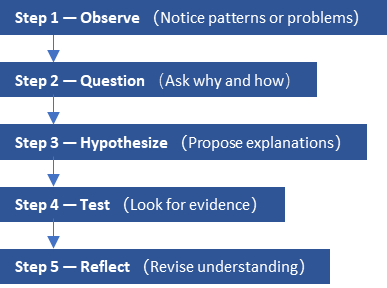
A Simple Learning Framework
Quick Self-Check
When learning something new, ask yourself:
🌱 Start Your Learning Journey
Science is not about knowing everything. It is about asking better questions, thinking more clearly, and understanding more deeply. In a world full of information, the ability to think is more valuable than the ability to memorize.
QLUSB is not just a place to learn science—it is a place to learn how to think.