-95x98.png)
Introduction
Stress is a natural part of life. When people face challenges, threats, or demanding situations, the body activates a set of biological responses designed to help them cope. These responses can increase alertness, improve reaction time, and prepare the body for action.
In small amounts, stress can be helpful. However, when stress becomes intense or persists for long periods, it can affect many systems in the body, including the brain, immune system, and metabolism.
Understanding how stress affects the body helps explain why managing stress is an important part of maintaining both physical and mental health.
Concept
Stress refers to the body’s response to situations that require adaptation or adjustment. These situations may be physical, emotional, or environmental.
When a person experiences stress, the brain detects potential challenges and activates a coordinated response involving the nervous system and the endocrine system.
A key component of this response is the HPA axis, which stands for:
- Hypothalamus
- Pituitary gland
- Adrenal glands
These structures work together to release stress hormones that prepare the body to respond quickly to demanding situations.
One of the most important stress hormones is cortisol, which helps mobilize energy and regulate many physiological processes during stress.
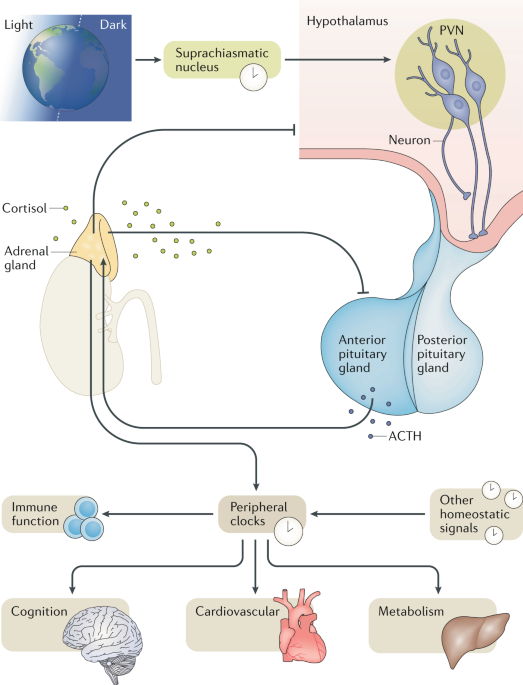
Figure 1. The hypothalamus–pituitary–adrenal (HPA) axis coordinates hormonal responses to stress. In response to a physical, emotional, or environmental stressor, the brain initiates a coordinated neuroendocrine response through the hypothalamus–pituitary–adrenal (HPA) axis. The hypothalamus signals the pituitary gland, which in turn stimulates the adrenal glands to release stress hormones, including cortisol. These hormonal signals help the body adapt to challenging situations by mobilizing energy and regulating multiple physiological processes during stress.
Mechanism
When the brain perceives stress, it activates two major biological pathways.
The first pathway involves the sympathetic nervous system, which produces the rapid “fight-or-flight” response. This response increases heart rate, raises blood pressure, and prepares muscles for quick action.
The second pathway involves the HPA axis, which releases cortisol and other hormones that help regulate energy metabolism and maintain alertness.
These responses are beneficial when dealing with short-term challenges. For example, they can help people respond quickly in emergencies or perform well during demanding tasks.
However, if stress remains elevated for long periods, the continued release of stress hormones can begin to affect multiple physiological systems.
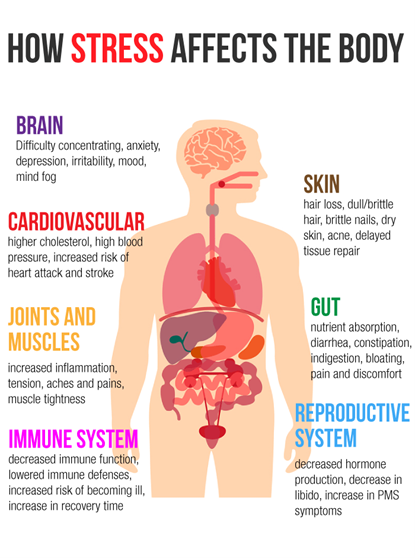
Figure 2. Stress activates the sympathetic nervous system and the hypothalamus–pituitary–adrenal (HPA) axis, producing effects across multiple body systems. When the brain perceives stress, it initiates two major biological pathways: a rapid sympathetic nervous system response that supports the “fight-or-flight” state, and a slower hypothalamus–pituitary–adrenal (HPA) axis response that promotes the release of cortisol and other stress hormones. These responses help increase alertness, mobilize energy, and prepare the body for short-term challenges. However, when stress is prolonged, sustained neural and hormonal activation can affect multiple physiological systems, including the brain, cardiovascular system, skin, gastrointestinal tract, muscles and joints, immune system, and reproductive system.
Systems Perspective
Stress affects many interconnected systems in the body.
The brain regulates emotional responses and decision-making during stressful situations. The endocrine system releases hormones that mobilize energy. The immune system may change its activity in response to stress signals. The metabolic system adjusts how the body stores and uses energy.
Short-term stress responses can enhance survival by improving attention and reaction speed. However, long-term stress may disturb the balance of these systems.
For example, prolonged stress may interfere with sleep patterns, alter immune responses, and affect metabolic regulation.
Because stress influences so many biological processes, it plays an important role in both physical and mental health.
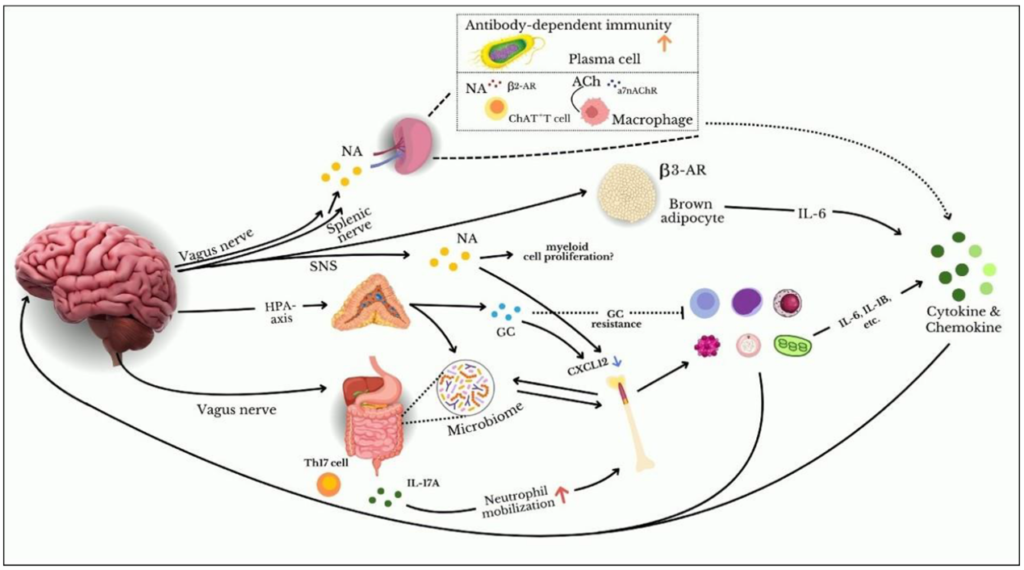
Figure 3. Stress influences interconnected brain, neuroendocrine, immune, and metabolic networks across the body. Stress engages a distributed physiological network centered on the brain, which communicates with peripheral organs through the sympathetic nervous system, vagus nerve, and the hypothalamus–pituitary–adrenal (HPA) axis. These pathways regulate the release of neurotransmitters and hormones, including noradrenaline and glucocorticoids, which in turn influence the immune system, metabolic tissues, and the gut microbiome. Through these interactions, stress can alter immune cell activity, cytokine and chemokine production, energy use, and inflammatory regulation. Short-term activation may support adaptation and survival, whereas prolonged stress can disrupt system balance and contribute to altered sleep, immune responses, and metabolic homeostasis.
Healthy Stress Management
Although stress cannot be completely avoided, healthy habits can help regulate the body’s stress responses.
Helpful strategies include:
• regular physical activity
• adequate sleep
• social support and communication
• relaxation techniques such as breathing or mindfulness
• maintaining balanced daily routines
These practices can help restore physiological balance and reduce the negative effects of chronic stress.
Key Takeaways
• Stress is the body’s response to challenges or demanding situations.
• The HPA axis coordinates hormonal stress responses.
• Short-term stress can improve alertness and performance.
• Chronic stress may disrupt multiple physiological systems.
• Healthy habits can help regulate stress and support overall well-being.